
Real vs Fake Matcha: How to Identify Authentic Japanese Matcha Powder
Why Authentic Japanese Matcha Matters
How to Distinguish Authentic Japanese Matcha Powder from Others
Taste Makes All the Difference
Common Signs of Fake Matcha Products
Why Authentic Matcha is Trending in Wellness Culture
Matcha has quickly become one of the most popular wellness drinks in the world. People are increasingly seeking out high-quality, ceremonial-grade matcha, whether it’s in iced lattes or traditional tea ceremonies. But as demand increases, so does the problem of low-quality imitations flooding the market.
If you’ve ever asked yourself, “How to know if matcha powder is real Japanese matcha?”, you’re not alone. Many of the products sold as “matcha” are actually low-grade green tea powders that don’t carry the flavour, nutrition, and experience of authentic Japanese matcha.
In this guide, we’ll cover the difference between real and fake matcha, how to identify premium-quality matcha, and what to look out for before you buy your next tin.
Why Authentic Japanese Matcha Matters
Real Japanese matcha is made from specially shade-grown tea leaves, and then stone-ground into an ultra-fine powder with care. The traditional process gives matcha its:
-
Bright green color
-
Umami flavor smooth
-
High antioxidants
-
Creamy sensation
However, low-quality or fake matcha often tastes bitter, looks dull in colour, and doesn’t have the nutritional benefits of premium matcha.
Knowing how to spot real matcha powder can totally change your matcha experience.
How to Distinguish Authentic Japanese Matcha Powder from Others
1. Check the Color Carefully
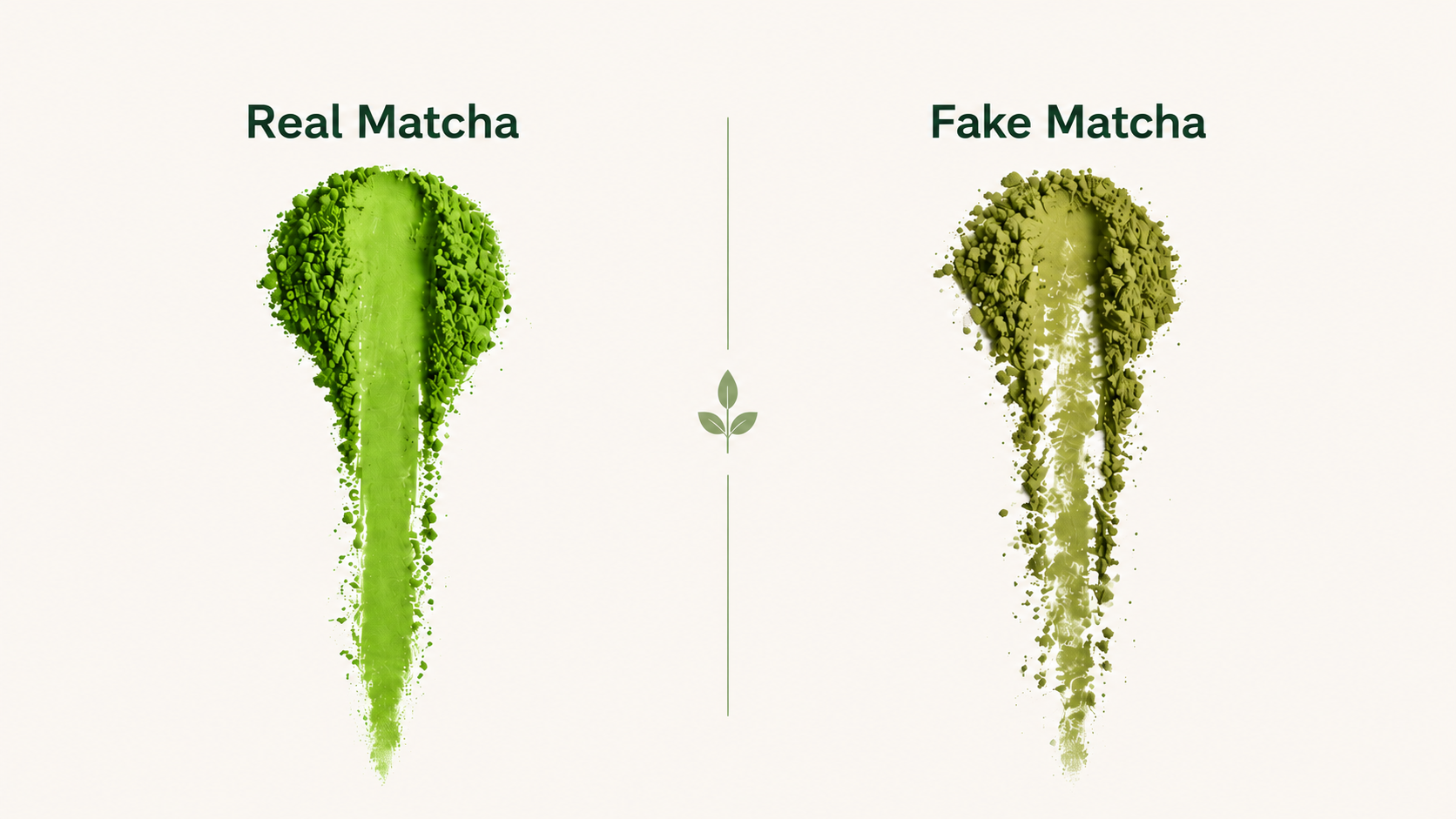
One of the easiest ways to identify real matcha powder is by looking at its colour.
Authentic Matcha
-
Bright, vibrant green
-
Fresh-looking with almost neon tones
-
Indicates high chlorophyll content from shade-grown leaves
Fake Matcha
-
Yellowish-green, dull olive color
-
Flat, muddy look
-
Often brewed from lower-grade tea leaves
The brighter the green, the better the quality generally. This is especially so with ceremonial grade matcha.
2. Pay Attention to Texture
High-quality matcha should feel extremely smooth and silky.
Real Matcha Powder
-
Ultra-fine texture
-
Feels soft like talcum powder
-
Mixes smoothly into water
Fake Matcha
-
Grainy or sandy texture
-
Clumps excessively
-
Feels rough between fingers
Authentic Japanese matcha is traditionally stone-ground, which creates its signature fine consistency.
3. Smell the Aroma
Premium matcha has a fresh and slightly sweet aroma.
Authentic Matcha Smells Like:
-
Fresh greens
-
Sea breeze
-
Creamy and vegetal notes
Fake Matcha Smells Like:
-
Dry hay
-
Bitter herbs
-
Almost no aroma at all
The aroma is one of the clearest indicators in the debate between fake and real matcha.
4. Taste Makes All the Difference
Good matcha should never taste overwhelmingly bitter.
Ceremonial Grade Matcha Taste
-
Smooth and umami-rich
-
Slight natural sweetness
-
Creamy finish
Low-Quality Matcha Taste
-
Harsh bitterness
-
Dry aftertaste
-
Chalky mouthfeel
True Japanese matcha delivers balance, not bitterness.
5. Look at the Origin
Authentic matcha comes from Japan, particularly regions like:
-
Kagoshima
-
Uji
-
Nishio
-
Shizuoka
If the packaging doesn’t clearly mention Japanese origin, it may not be authentic.
When searching for how to distinguish authentic Japanese matcha powder, the origin is one of the most important factors.
6. Understand Matcha Grades
Not all matcha is created equal.
Ceremonial Grade Matcha
-
Highest quality
-
Best for drinking traditionally
-
Smooth and vibrant
Culinary Grade Matcha
-
Ideal for recipes and baking
-
Slightly stronger flavor
-
More affordable
If you’re drinking matcha straight, always choose ceremonial-grade matcha.
Common Signs of Fake Matcha Products
The internet has also popularised quirky search terms like:
-
fake matcha cup
-
fake matcha shrimp
These terms often trend around artificially colored foods or products pretending to contain matcha.
Here are common red flags:
-
Extremely low prices
-
Artificially bright green drinks
-
Added sugars and flavours mask bitterness
-
No mention of Japanese sourcing
Many café drinks labelled “matcha” actually contain sweetened green tea powders instead of authentic matcha.
Why Authentic Matcha is Trending in Wellness Culture
Modern consumers are becoming more ingredient-conscious. The rise of:
-
Clean eating
-
Functional beverages
-
Slow living rituals
-
Antioxidant-rich drinks
has made premium matcha more desirable than ever.
Authentic matcha isn’t just trendy, it supports:
-
Sustained energy
-
Better focus
-
Calm alertness
-
Mindful daily routines
This is why wellness communities are prioritising real matcha powder over artificially flavoured alternatives.
How to Store Matcha Properly
Even premium matcha can lose quality if stored incorrectly.
Best storage tips:
-
Keep away from sunlight
-
Store in an airtight container
-
Refrigerate after opening
-
Avoid moisture exposure
Freshness plays a huge role in maintaining the flavour and colour of authentic matcha.
How to Buy Good Matcha Online
Before purchasing:
✔ Check ingredient labels
✔ Verify Japanese origin
✔ Look for ceremonial-grade quality
✔ Read reviews carefully
✔ Avoid products with additives
A trusted brand should always provide transparency about sourcing and quality.
Conclusion
Learning how to identify authentic Japanese matcha powder will help you avoid low-quality fakes and truly enjoy the benefits of premium matcha.
The whole experience of the matcha, from colour, texture, aroma, and taste, is something that the fakes cannot reproduce. Whether you’re making traditional tea or modern wellness drinks, high-quality ceremonial-grade matcha makes all the difference.
If you’re looking for authentic Japanese matcha crafted for modern lifestyles, explore Bree Matcha for premium-quality matcha designed for both beginners and matcha enthusiasts. Discover the true taste of real matcha and elevate your daily ritual with every sip.






Share:
Why Is Matcha Bitter? Understanding Matcha Taste & Flavor
7 Refreshing Iced Matcha Recipes for the Perfect Summer Glow